

PORTUGUESE AS A FOREIGN LANGUAGE | COURSE
ADULTS
Designed for people aged 18 and over, our Portuguese as a Foreign Language (PFL) program provides a welcoming learning environment where participants can develop the confidence and skills to communicate in Brazilian Portuguese. By combining language learning with Brazilian cultural contexts, we aim to connect knowledge, experiences, and perspectives.
If there is sufficient demand, we will also offer classes for teens aged 14 to 17, with a teaching approach adapted to their age, interests, and learning needs.
PEDAGOGICAL APPROACH
Our approach is built around three core competencies that we consider essential to learning and using a language:
Linguistic competence
This refers to an understanding of the formal aspects of the language, including vocabulary, grammar, pronunciation, spelling and discourse structures. It provides the foundation for understanding and producing spoken and written language, and serves as the basis for developing other communicative competencies.
Interactional competence
This is the ability to use language effectively in real-life communication. Beyond knowing grammatical rules, it involves interpreting intentions, negotiating meaning and adapting to different contexts, people and communication goals. It helps learners build the confidence they need to take part in a wide range of social interactions in Portuguese.
Intercultural competence
This involves developing the awareness and sensitivity needed to understand and respect different cultural perspectives. Through exploring Brazilian traditions, values, linguistic varieties and society, learners develop a broader understanding of Portuguese as both a social practice and a cultural expression. This encourages more thoughtful, respectful and meaningful interactions.
While linguistic competence focuses on how the language works, interactional and intercultural competence expand learning by placing Brazilian Portuguese within the contexts where it is actually used. That is why our conversation circles explore topics that go beyond the language itself, including history, the environment, popular traditions, Brazil’s cultural and geographic diversity, the arts and everyday life.
Learning Portuguese with us is also an opportunity to discover and understand Brazil in all its diversity.
TEAM
A strong educational project is never built alone. Our approach was developed by a team with expertise in applied linguistics, language teaching and educational management. Their dedication has been essential to creating a coherent programme that responds to the needs of those who want to learn Brazilian Portuguese with us.
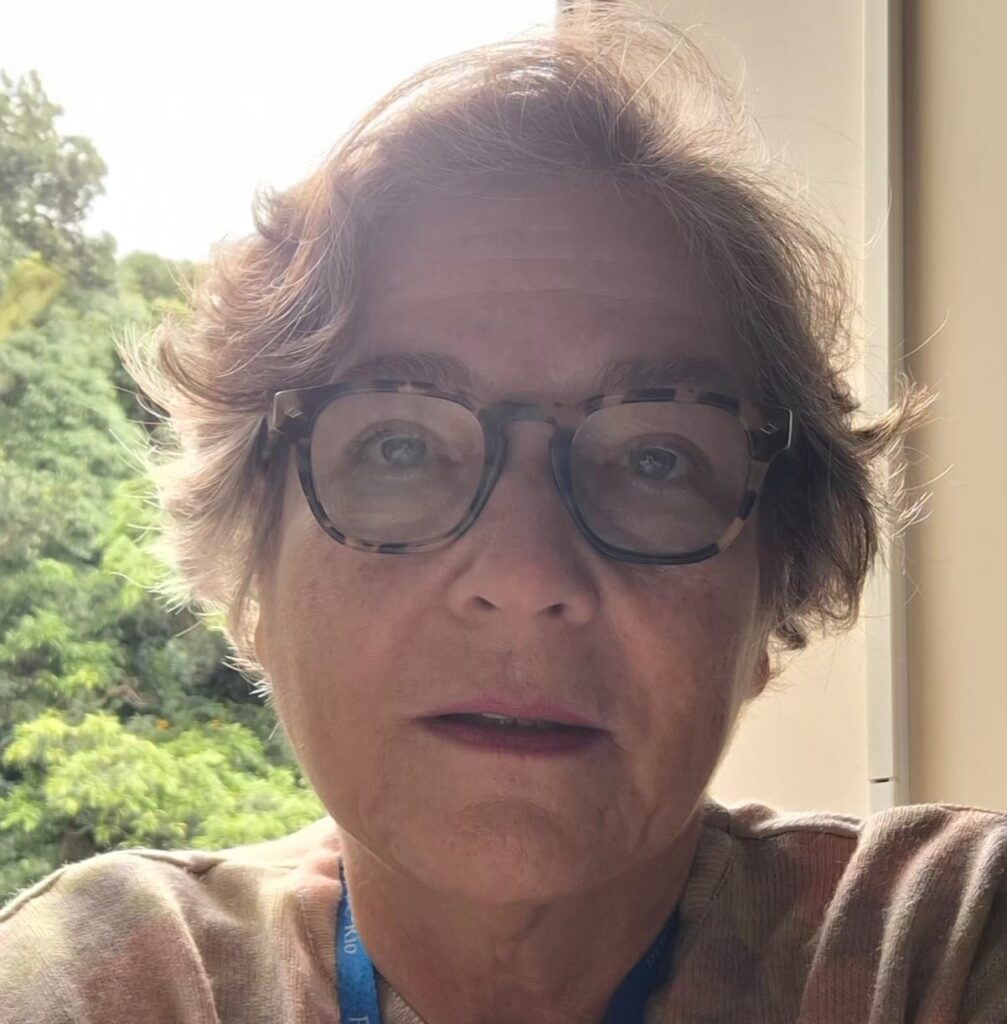
Adriana Borgerth
After earning a degree in Actuarial Science (UFRJ, Brazil), Adriana decided to change paths and started giving German language courses. She fell in love with language teaching, and completed both a Master’s Degree and a PhD in Language Studies (PUC-Rio, Brazil). Her work focuses on the intersection of language teaching and intercultural awareness, exploring how cultural aspects influence language learning. In addition to having a distinguished career as a German teacher, Adriana also teaches Linguistics in the Portuguese as a Foreign Language Teaching Program at PUC-Rio. A visual arts enthusiast, she’s the proud mother of a system developer and a designer, as well as the grandmother to a grandson who brings her great joy. In her spare time, she nurtures her artistic side through drawing and painting.
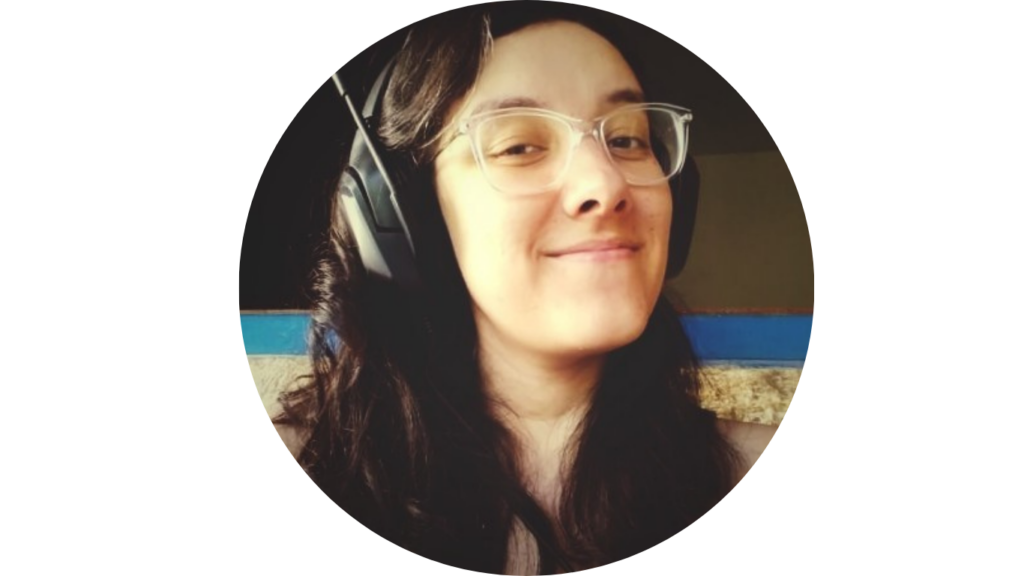
Mitsue Siqueira
With a B.A. in Language and Literature (UFF, Brazil) and a postgraduate degree in Teaching Portuguese as a Foreign Language (PUC-Rio, Brazil), Mitsue has dedicated much of her professional life to translating content in various fields. Currently working as a Recruitment Manager at a multinational company, Mitsue has been able to hone her skills in team management, process structuring and working in multilingual contexts. A Brazilian immigrant, she moved to Canada in 2021, and since then, she has come up with a multitude of ideas on how to promote Brazilian culture on Canadian soil.
Karine Rutpaulis
Karine is the Brazilian expatriate who has structured the methodology of our Portuguese courses. She holds a degree in French and Portuguese Translation (UNESP, Brazil) and holds a teaching license in Portuguese Language from the Claretiano University Center in Brazil. More recently, Karine specialized in Portuguese as a Foreign Language (PUC-Rio). Back when she lived in Brazil, she worked as an executive assistant in the countryside of São Paulo, hometown to her family, and played an important role for more than ten years as an assistant in the coordination department of a language school in Brasília. In her spare time, Karine loves enjoying music (piano) and nature.
LEVELS
Our program is organized into six levels, each named after one of the major peaks located within Brazilian territory. As each participant progresses through their learning journey, they reach a new altitude, symbolizing the deepening of their linguistic, interactional, and intercultural competencies. Throughout this journey, we will embark together on an expedition across some of the highest points in Brazil.
- 1st term | Morro do Couto (Rio de Janeiro): 2,687 metres
- 2nd term | Pico do Cristal (Minas Gerais): 2,769 metres
- 3rd term | Pico das Agulhas Negras (Minas Gerais and Rio de Janeiro): 2,791 metres
- 4th term | Pedra da Mina (Minas Gerais and São Paulo): 2,798 metres
- 5th term | Pico do Calçado (Minas Gerais and Espírito Santo): 2,849 metres
- 6th term | Pico da Bandeira (Minas Gerais and Espírito Santo): 2,891 metres
Morro do Couto (A1.1) and Pico do Cristal (A1.2)
By the end of the first two terms of the program, each participant should be able to:
- understand expressions, dialogues, and short texts related to everyday situations;
- introduce themselves and exchange personal information, such as nationality, occupation, and interests;
- ask basic questions and answer simple questions about familiar topics in Brazil;
- take part in straightforward social interactions, such as making invitations, making requests, and arranging plans in everyday situations;
- describe people, places, objects, and routines clearly;
- read and produce short texts, such as personal introductions, messages, and accounts of everyday experiences;
- communicate in everyday situations with speakers who use simple and accessible language;
- recognize some fundamental aspects of Brazilian culture.
Pico das Agulhas Negras (A2.1) and Pedra da Mina (A2.2)
By the end of the third and fourth terms of the program, each participant should be able to:
- handle communication situations while travelling, taking part in everyday activities, and engaging in routine social interactions in Brazil;
- participate more actively in conversations about familiar topics, personal interests, studies, work, and current affairs;
- express opinions, agree, disagree, and provide basic justifications to support their points of view;
- read and produce texts in a range of simple genres and registers, adapting their language to their communicative goals;
- use Portuguese in a wider variety of social and professional contexts;
- deepen their knowledge of Brazilian culture and develop a better understanding of the relationship between language and society.
Pico do Calçado (B1)
By the end of the fifth term of the program, each participant should be able to:
- express more nuanced opinions and ideas, adapting their use of the language to different contexts and registers;
- understand spoken and written texts from new genres and at increasing levels of complexity, identifying intentions and perspectives;
- produce narrative, descriptive, and expository texts with increasing autonomy;
- defend opinions and develop points of view in a clear and organized manner;
- navigate different registers and forms of communication, recognizing formal and informal contexts;
- recognize the diversity of historical, social, and cultural perspectives that shape Brazil;
- speak Portuguese with greater autonomy in personal interactions and multicultural contexts.
Pico da Bandeira (B2)
By the end of the sixth term of the program, each participant should be able to:
- communicate spontaneously in a variety of situations, interacting naturally with Brazilian speakers;
- understand more complex spoken and written texts, identifying nuances in intentions and different points of view;
- produce detailed spoken and written texts on a wide range of topics, demonstrating a strong command of the language’s main structures;
- present arguments, defend opinions, and support points of view using discourse strategies appropriate to the context;
- adapt their use of Portuguese to different text genres and communication situations, with a high degree of autonomy;
- critically engage with historical and social aspects of Brazil, recognizing the diversity of cultural perspectives that shape the country.
SCHEDULE
Our program is organized into three academic terms per year. Each term corresponds to an independent module, with specific learning objectives and content for each level.
- 1st term: January to March
- 2nd term: April to June
- 3rd term: September to November
July, August, and December are vacation months, during which there are no regular classes. Each term includes 48 instructional hours, with 4 hours of classes per week.
TUITION
For group classes, tuition is 20 dollars per instructional hour. For individual lessons, the rate is 38 dollars per instructional hour. Payment can be made monthly or as a single term payment. Those who choose to pay the full term in advance receive a 10% discount on the total amount.
Group Classes, 4 hours/week (6 to 8 participants)
- Monthly payment: CAD 320
- Payment by term: CAD 864 (10% discount)
- Monthly payment: CAD 608
- Payment by term: CAD 1,641 (10% discount)
Payment is due at least 15 days before the start of the applicable month or term.
REGISTRATION
Registration remains open throughout the year, subject to availability in each class. We are currently accepting registrations for group classes starting in January 2027:
Eastern Time
- Group class for English speakers: Tuesdays and Thursdays, 6:50 p.m. to 8:50 p.m.
- Group class for French speakers: Mondays and Wednesdays, 6:50 p.m. to 8:50 p.m.
Pacific Time
- Group class for English speakers: Saturdays, 9:00 a.m. to 12:30 p.m.
If the group class schedules do not fit your routine, you can also register for individual lessons. While they follow the same pedagogical approach described on this page, private lessons can be tailored to each person’s goals and availability.
Not sure which class or format is the best fit for you? Contact us at oi@casadaculturadobrasil.com.
House of Brazilian Culture in Canada. All rights reserved.